
I’m a Build-aholic.
I’m addicted to building new projects and and starting new things again and again.

I’m a Buildaholic. I’m addicted to building new projects and and starting new things again and again.
Some might call it an adrenaline rush. Others would call it a dopamine hit.
I’m not a neuroscientist to explain what it is.
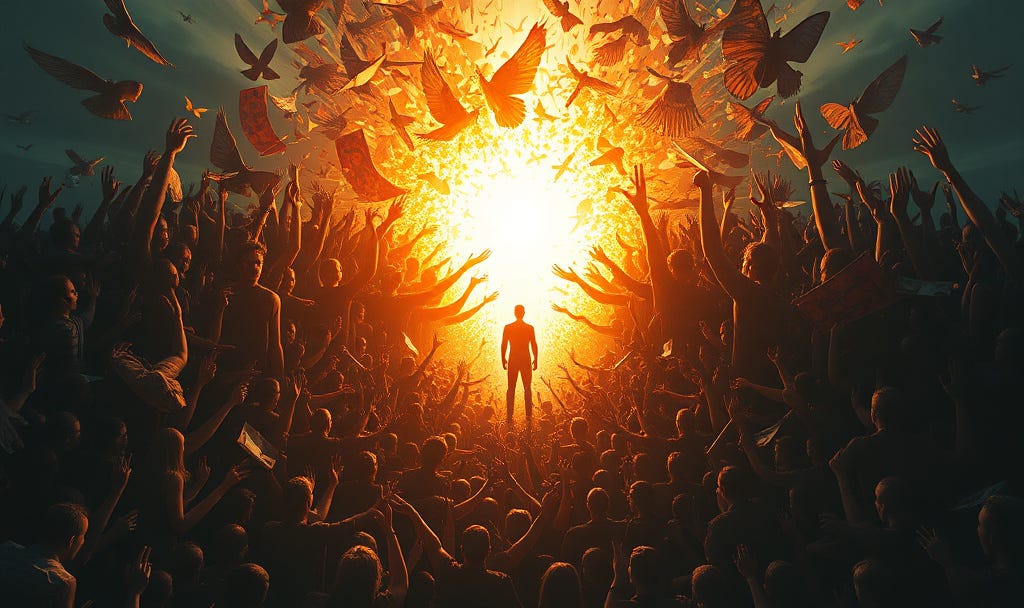
But I know this: every new project brings a new kind of excitement.
And with time, I realized how much that excitement shaped my work life, if not my whole life.
─── ⌁ ───
Since childhood, I enjoyed building stuff. It started with making websites, writing essays, and producing songs & videos. In my early university years, it transitioned to organizing events and building communities. That enjoyment found its place in the world of startups.
Six years ago, I started helping early-stage African entrepreneurs to build and grow their companies. More specifically I support them with choosing the right key metrics, building data-driven growth strategies, and creating a narrative around it. By now, I have worked directly with at least 60 entrepreneurs and indirectly with a couple of hundreds. In my work vocabulary, ‘working directly’ means doing one-to-one consultations, and advisory sessions for a certain period of time and ‘working indirectly’ refers to masterclasses and group activities.
Every startup brings excitement.
It’s a new entrepreneur, a new market, a new problem, a new solution, and new challenges. What comes with that is a set of emotions: awe of discovery, anxiety about how to better help them, curiosity to find the best information, frustration about the project or myself, creativity when finding the best solution, silliness in discovering that it was not that hard after all, and calmness when putting everything in place.
In the medium term, it brings pride to see them succeed.
─── ⌁ ───
The first few years felt like heaven. I fell in love with that rollercoaster of emotions. It brought meaning to my life.
But then something kept surfacing. I want to do more, fast, now.
I started taking more projects. Some were for financial reasons, others were to feel more alive. Remote work helped make this possible. Yet, based on the nature of my work, ‘more’ means I need to allocate space in my calendar and in my brain, even if it’s minimal.
By nature, I am someone who loves optimizing things. I want to deliver fast without reducing quality. I’m grateful to the internet for making outsourcing easier and to AI for making things faster. Yet, some processes require time to be done properly, and you can’t rush them.
I started needing things to happen now. With more projects and the tendency to deliver fast, I started pushing aside things I planned to do for something immediate. I would try to act immediately on anything I could influence. If it was a rest day, I would try to come up with something new.
In the language of ChatGPT ‘I slipped into overcommitment, chased acceleration, and ultimately lived in a state of constant immediacy bias.’
─── ⌁ ───
But underneath, it’s an addiction.
Just like an alcoholic, a buildaholic develops tolerance, moves fast, and needs the next hit now. Their thinking revolves around finishing this project so they can start the next one. They can isolate themselves to build or bond easily with other buildaholics. I know some might consider this analogy a bit pushed. But last July, I literally had to push myself to take a one-week holiday and not do anything like consulting, writing, or working.
However, what makes my addiction different is that it’s accepted. Some clap for it because of the money, others for showing adaptability, and the rest for the stories that come through it.
At first, I thought that it was happening only at work until I saw the same pattern sneaking into other areas like dating and traveling. I liked the excitement of someone new, or somewhere new, more than the stability that followed. Certainly, there are more people who are even more addicted in these areas.
One thing is sure: those addictions were not possible for the majority at this scale 30 years ago. Technology made them more effortless, society made them more accepted, and fast-lifestyle made them more needed.
─── ⌁ ───
You might ask if there are solutions for this kind of addiction?
I am not sure if that’s the right question.
So far, my writing has treated it as something clinical with a negative connotation. But, we should not neglect that there is passion, hunger, and craving. It’s part of the creative endeavor.
I’m sure, a few years from now, someone from the scientific community will come and characterize it as a clinical addiction that needs treatment. Certainly, podcasters will do interviews with ex-buildaholics. This is not new. It happened in sports with exercise addiction. It’s defined as a compulsive engagement in any form of physical exercise, despite negative consequences. For reference, 43% of athletes have it, and being a buildaholic is not different.
The question then is not how to treat it, but rather “How to build a healthy relationship with it?”
For me, it boiled down to being self-aware of it, taking rests, being around people more often and knowing how to manage it.
I see your point. It can be an addiction, and Luffy shows it best. He’s hooked on adventure, always chasing the next thrill, but what makes him powerful is how he turns that craving into loyalty and communities. I think that being a buildaholic works the same way, the rush matters less than the impact it leaves behind.